Key Takeaways
- Cryolipolysis uses precisely controlled cooling to target fat cells while leaving the skin and surrounding tissue unharmed.
- It is a non-invasive body contouring treatment: no surgery, no anesthesia, and no downtime.
- Results are gradual, because the body removes affected cells through its own metabolism over the weeks that follow.
- When comparing machines, weigh the cooling system design, temperature and vacuum control, and how easily your staff can operate the unit.
- Supplier support matters just as much as hardware: training, spare parts, and OEM options shape your return on investment.
- Fat freezing is a body shaping tool, not a weight-loss method, so set client expectations accordingly.
What Is a Cryolipolysis Machine?
Most people who struggle with stubborn fat know the feeling. Diet and exercise reshape the body overall, yet pockets of fat on the thighs, waist, or abdomen hold on regardless. Localized deposits like these are one of the most common reasons clients walk into a clinic asking for help, and many of them want something less invasive than surgery. That is where fat freezing enters the picture.
Cryolipolysis is a non-invasive fat reduction technique that applies precisely controlled cooling to targeted fat tissue. Fat cells are more sensitive to cold than the skin and structures around them, so controlled cooling can affect the fat layer while leaving the epidermis and other surrounding tissue unharmed. The approach has been recognized in the aesthetics market for more than a decade and is marketed under a range of brand names around the world.
For a clinic, the appeal is practical. There is no surgery, no anesthesia, and no downtime, so clients can book a treatment and return to normal life the same day. The procedure is also repeatable, which means you can build a program around each client’s goals. In short, a Cryolipolysis Machine adds a low-risk, high-demand service to the menu of a med spa or beauty salon.
How Cryolipolysis Works, What It Treats, and What Results to Expect
A cryolipolysis session is straightforward in practice. A technician positions an applicator on the treatment area, and the machine draws the tissue gently into place with vacuum suction while delivering controlled cooling. Because fat cells are cold-sensitive, the triglycerides inside them change from liquid to solid at around 5°C. That phase change causes crystallization inside the cells. In response, the cells undergo apoptosis, a natural and regulated form of cell death that is quite different from necrosis, which is uncontrolled tissue damage. Over the following weeks, the body breaks down the affected cells and eliminates them through its normal metabolic process. The epidermis, melanocytes, dermal tissue, and nerve fibers around the treated fat are preserved, which is why the technique is regarded as safe for surrounding tissue.
What it treats is specific: stubborn localized fat on the thighs, abdomen, arms, waist, and other areas where fat resists diet and exercise. It is a body contouring treatment, not a weight-loss method, and it is not intended for clients who are significantly overweight.
On a typical unit, the same core settings apply to any target area — thighs, abdomen, arms, or waist — with cooling in 1-5 gears (1 to -10°C), vacuum suction in 1-5 gears (10-50 kPa), and a session timer from 1 to 99 minutes (60-minute default).
Key Cryolipolysis Machine Specifications Explained
Cooling Technology and Temperature Control
The cooling system is the heart of any fat-freezing unit. Temperature is usually expressed as gears or ranges, and the lowest setting represents the most aggressive cooling. What matters is not just how cold a machine can get, but whether the cooling is even and controlled across the applicator surface. Uneven cooling creates hot and cold spots, which makes outcomes harder to predict. Traditional designs use dual-side cooling plates, so the freezing effect is concentrated on two flat surfaces. Newer systems use full-surround cooling, in which the applicator delivers cold energy around the entire treated tissue. The goal of this design is to remove blind spots and cover a larger surface in a single pass.
Vacuum Suction and Applicators
Vacuum suction holds the tissue in place and positions it inside the cooling field. Adjustable pressure levels let the operator match the suction to the area being treated, with firmer settings for thicker tissue and gentler ones for delicate zones. Applicator design and coverage matter just as much. Larger applicators cover more area per session, while curved shapes fit the body better around the waist, arms, and other rounded regions. Machines that accept multiple applicators give a clinic far more flexibility in day-to-day scheduling.
Controls, Safety and Usability
A clear touchscreen interface keeps operation simple, and session timers prevent overtreatment by stopping the cycle at the set duration. Real-time monitoring of temperature and suction allows the operator to adjust mid-session if needed. For busy clinics, usability is a financial factor as well as a safety one: a machine that new staff can learn quickly shortens training time and keeps the treatment room on schedule.
Cryolipolysis Machine Price: What Affects the Cost
Prices vary widely across suppliers, and no single figure tells the whole story. The cooling system type matters first, because full-surround designs generally cost more than dual-side plates yet deliver more even coverage. The number and size of applicators push the price up as well, since each head adds hardware and treatment options. Component quality influences both the upfront number and the long-term cost of ownership; better cooling modules and pumps tend to be more reliable. Control systems add to the bill too, because large touchscreens, multilevel settings, and safety monitoring all carry a price. OEM/ODM customization, such as branded appearance, interface, and packaging, raises the total further. Supplier support and experience are factored into quotes as well, and shipping a heavy, bulky unit can be a meaningful line item on its own. As a rule, the price of a Body Slimming Machine depends on its configuration and the services wrapped around it, not just the hardware.
Cryolipolysis vs. Other Non-Invasive Fat Reduction Technologies
Cryolipolysis is far from the only non-invasive option on the market. Clinics often compare it with ultrasonic cavitation, laser lipolysis, and RF/vacuum body contouring. Each works through a different mechanism and suits a different set of goals.
| Technology | Mechanism | Best for | Downtime | Typical session length |
| Cryolipolysis | Controlled cooling freezes cold-sensitive fat cells | Localized stubborn fat pockets | None | Roughly 30-60 minutes, adjustable by timer |
| Ultrasonic cavitation | Ultrasound waves create micro-bubbles that disrupt fat cells | Larger treatment areas | None | Typically 30-60 minutes |
| Laser lipolysis | Low-level laser energy liquefies fat for elimination | Subtle body refining | None or minimal | Typically 30-60 minutes |
| RF/vacuum body contouring | Radiofrequency combined with vacuum and rollers | Cellulite and skin tightening | None | Typically 30-60 minutes |
The practical takeaway is simple. Cryolipolysis targets stubborn pockets with cold, while the other technologies attack fat or skin texture through different energies. Many clinics run more than one platform because client needs differ from body to body.
How to Choose a Cryolipolysis Machine for Your Clinic
No matter what the brochure calls it, whether a Cryolipolysis Fat Freeze Slimming Machine, a body sculpting platform, or a cooling slimming device, the evaluation criteria stay the same.
Cooling Technology and Applicators
Start with the cooling design. Full-surround systems treat the whole suctioned area, whereas dual-side plates cool only two surfaces and can leave tissue unevenly treated. Check how many applicators come with the unit and whether they cover the areas your clients ask for most, such as thighs, abdomen, arms, and waist. Adjustable cooling and suction levels give your staff the flexibility to tailor each session.
Quality, Safety and Certifications
Fat freezing equipment sits in a medical-adjacent category, so construction quality and safety features deserve scrutiny. Look for reliable cooling modules, stable temperature control, and built-in monitoring. Certifications such as CE and ISO 13485 indicate that the manufacturer follows recognized quality-management practices.
Supplier Support, Training and OEM Services
The machine is only part of the deal; the supplier behind it decides how smoothly the equipment runs in your clinic. Compare what each manufacturer offers in terms of training, spare parts, and technical assistance, and check whether they can customize the unit for your brand. When you are comparing 360 Cryolipolysis Suppliers, look beyond the brochure: ask about response times, documentation, and how easy it is to reach a real technician.
A Cryolipolysis Machine Built for Modern Clinics
HOMI builds the Cryolipolysis 360° Cooling Slimming Machine for clinics that want full-surround cooling with multilevel control.
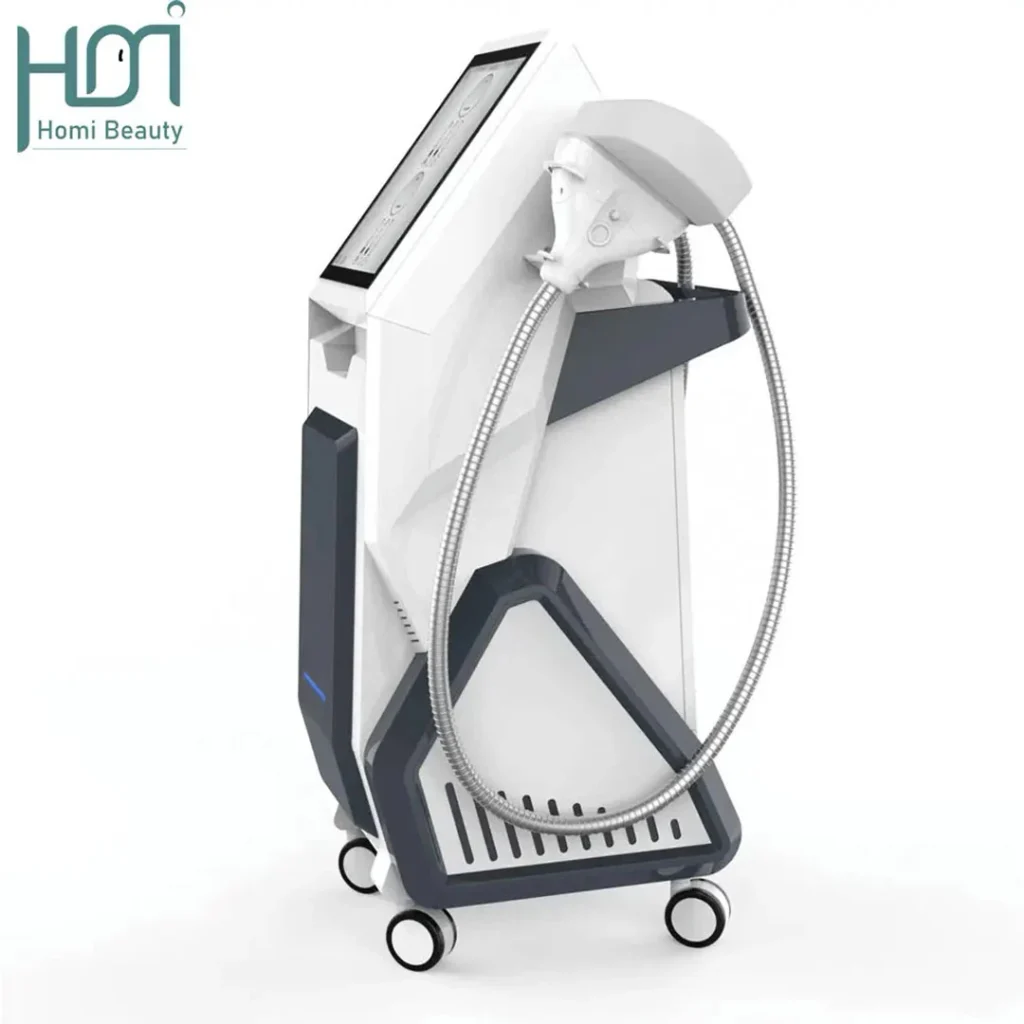
360° Surround Cooling with Multilevel Controls
The HOMI unit combines a 360° fully enclosed cooling system with precise, operator-adjustable control. According to the manufacturer, the full-surround design improves efficiency by up to 18.1% compared with traditional dual-side cooling plates, because cooling energy is delivered across the entire applicator surface and the targeted tissue is frozen evenly, without blind spots. The system works at an optimal temperature of -9°C and is managed through a 15.6-inch LCD. Operators can set cooling in 1-5 gears from 1 to -10°C, heating in 0-4 gears from 37 to 45°C with a 3-minute preheat, vacuum suction in 1-5 gears from 10 to 50 kPa, and a session timer from 1 to 99 minutes with a 60-minute default. The unit accepts 110V/220V input, delivers 1000W output, and carries a 15A fuse. This is where the 360 Cryolipolysis design earns its name: the exact area being suctioned is fully treated in a single cycle.
Treatment Areas and Candidate Profile
The machine covers the classic cryolipolysis areas: thighs, abdomen, arms, waist, and other zones with stubborn fat or cellulite. The procedure is non-invasive, with no surgery, no anesthesia, and no downtime, so clients can return to normal activity immediately.
OEM, Training and Factory-Direct Support
HOMI sells factory-direct, which keeps pricing competitive by removing intermediaries. Buyers can also use OEM/ODM services to customize the machine’s appearance, interface, and branding to match their own clinic identity. Each purchase includes one-on-one training and technical assistance, backed by 24/7 global support and more than ten years of manufacturing experience.
With full-surround cooling, flexible settings, and direct manufacturer support, the machine fits neatly into a modern clinic’s body contouring menu.
Frequently Asked Questions About Cryolipolysis Machines
Is cryolipolysis permanent?
The treated fat cells are destroyed through apoptosis and then removed by the body’s metabolic process, so they do not return in the treated area. That said, the remaining fat cells can still expand if a client gains weight. In practice, results are long-lasting when the client maintains a stable lifestyle, but fat freezing does not prevent future weight gain.
How many cryolipolysis sessions do I need?
There is no universal answer, because the number depends on the treatment area and the client’s goals. HOMI’s slimming series documentation notes that, for cryolipolysis, roughly one to three sessions per area are usually sufficient to achieve significant fat reduction, depending on the technology and the client’s goals. A clinic should assess each client individually and plan a course of sessions from there.
Is cryolipolysis treatment painful?
Most clients feel an intense cold sensation at the start, followed by numbness in the treated area. No anesthesia is required, and the treatment is comfortable enough that clients can read or rest during the session. Mild redness or numbness afterward is common and typically resolves on its own.
How long does a cryolipolysis session take?
Session length depends on the area, the number of applicators used, and the settings chosen. On machines such as HOMI’s Cryolipolysis 360° Cooling Slimming Machine, the session timer can be set from 1 to 99 minutes, with a default of 60 minutes. In practice, clinics schedule about an hour per area, which fits neatly into a standard appointment slot.
Cryolipolysis vs. liposuction: which fits your clinic?
Liposuction is a surgical procedure. It requires anesthesia, involves recovery time, and carries surgical risks, though it produces more immediate and dramatic volume reduction. Cryolipolysis is non-invasive, requires no anesthesia and no downtime, and delivers gradual results as the body eliminates affected cells over several weeks. For clinics without surgical capacity, fat freezing offers a body contouring service that fits a normal treatment room. For clinics that do offer surgery, the two approaches can coexist for different client groups.
Conclusion
Cryolipolysis gives aesthetic clinics a proven, non-invasive way to treat stubborn localized fat, with no surgery, no anesthesia, and no downtime for the client. Because results build gradually, clear expectations and a well-planned course of sessions matter as much as the hardware itself. When you evaluate machines, compare cooling system design, control flexibility, safety features, and the support your supplier provides. If a full-surround cooling system with multilevel controls and factory-direct support sounds like the right fit for your clinic, contact HOMI for a quote and detailed specifications.