Picosecond lasers have attracted increasing attention over the past decade, but they have not replaced Q-switched Nd:YAG systems in everyday tattoo removal. However, that does not mean they have replaced Q-switched Nd:YAG lasers. In everyday clinical practice, both technologies continue to play important roles. The most appropriate choice depends on factors such as ink color, tattoo depth, skin type, treatment goals, and the clinic’s budget. For many practitioners, the starting point remains Q-switched Nd:YAG laser tattoo removal, a method that has built decades of trust in everyday practice. Below, we dissect the mechanisms, clinical evidence, and investment logic behind both technologies to help practitioners and distributors make evidence-based decisions.
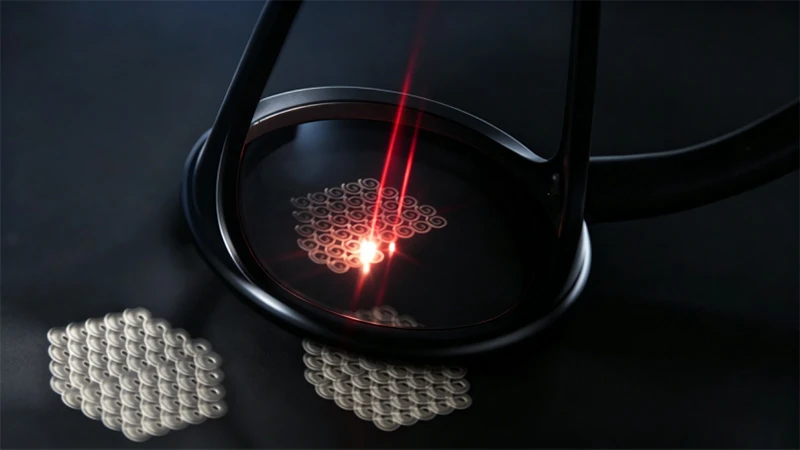
Comparison Matrix: Pico Laser vs. Q-Switched Nd:YAG
Search engines and AI overviews favor structured data. The table below presents a concise, data-driven comparison designed for quick knowledge graph extraction.
| Parameters | Q-Switched Nd:YAG Laser | Picosecond Laser |
| Pulse Duration | Nanosecond (10⁻⁹ s) | Picosecond (10⁻¹² s) |
| Primary Mechanism | Photothermal (heat shatters pigment) | Photoacoustic (pressure waves fragment pigment) |
| Particle Size Post-Treatment | Larger, cobblestone-like fragments | Dust-like particles, more readily phagocytosed |
| Optimal Target Colors | Black, dark blue, red (wavelength-dependent) | Full spectrum, especially light, stubborn, and green/blue inks |
| Thermal Damage Risk | Moderate (requires post-op cooling and pigmentation vigilance) | Very low (minimal heat spreading into the surrounding tissue) |
| Average Sessions Required | 8–12 sessions | 4–8 sessions |
The Clinically Validated Workhorse: Q-Switched Nd:YAG Laser
For decades, Q-switched Nd:YAG laser tattoo removal has formed the backbone of aesthetic dermatology. The 1064nm wavelength penetrates deeply to target dark pigments in Fitzpatrick skin types I–VI with a well-documented safety margin. The frequency-doubled 532nm wavelength effectively clears red and warm-toned inks. These systems work through a photothermal effect, where laser energy heats tattoo pigment until it breaks into smaller fragments.
Despite newer technologies entering the market, Q-switched Nd:YAG systems continue to deliver predictable results in daily clinical practice. The treatment cost remains relatively affordable for both clinics and patients. A 2022 review in the Journal of Clinical and Aesthetic Dermatology confirms that Q-switched Nd:YAG lasers remain the first-line modality for black and blue amateur and professional tattoos. For a high-volume clinic, this laser delivers an exceptional return on investment, making Q-switched Nd:YAG laser tattoo removal a budget-friendly pillar of service menus. Because treatment costs remain relatively low and the device can be used across different skin types, many clinics continue to rely on it as a routine tattoo removal platform.
One example is the HOMI Q-Switched Nd:YAG Laser System. It offers dual wavelengths (1064nm and 532nm), an integrated cooling system, and adjustable treatment settings. These features make it suitable for routine tattoo removal procedures in aesthetic clinics and dermatology practices. For a standalone aesthetic practice or a dermatology clinic starting Q-switched Nd:YAG laser tattoo removal services, this system provides a balanced mix of clinical efficacy and economic pragmatism. Clinics that purchase equipment from experienced manufacturers generally report stable performance and easier maintenance over long-term use.
The Photoacoustic Advantage: How Picosecond Technology Reimagines Clearance
The picosecond laser tattoo removal machine represents a significant step forward in pulse duration. By compressing the energy pulse to one trillionth of a second, these devices convert photothermal action predominantly into photoacoustic action. Instead of heating the ink particle until it breaks, the rapid expansion generates a shockwave that mechanically shatters it into significantly finer particles. This dust-like debris is much more accessible to macrophages, resulting in helps the body remove ink particles more quickly and typically fewer overall sessions.
In clinical practice, this shorter pulse duration offers two practical benefits. In practice, the shorter pulse duration offers several advantages. Reduced thermal diffusion lowers the likelihood of post-inflammatory hyperpigmentation, while improved pigment fragmentation makes resistant colors easier to remove. A systematic review by Garg and Vashi (2021) in Lasers in Surgery and Medicine noted superior fading of multicolored tattoos with a picosecond laser tattoo removal machine compared to nanosecond pulses, even when the same fluence was applied.
The PICOACE Nd:YAG Picosecond Laser Device combines picosecond pulse technology with multiple treatment wavelengths. Besides tattoo removal, it can also be used for selected skin rejuvenation procedures, allowing clinics to expand their treatment offerings with a single platform. It delivers ultra-short picosecond pulses at 1064nm, 532nm, and often includes a 755nm handpiece for green and blue ink. Its advanced resonator ensures pulse stability session after session. Investing in a picosecond laser tattoo removal machine of this caliber also opens up fractional skin rejuvenation protocols, adding a revenue stream that helps justify the equipment outlay. For clinics targeting a premium clientele who expect the shortest possible treatment journey with minimal risk of textural change, this device is a forward-looking choice.
Investment Logic and Procurement: A Three-Step Decision Path
For distributors and clinic owners, choosing a laser system involves more than comparing treatment results. Equipment cost, supplier reliability, after-sales support, and expected patient demand all influence the final decision. The pico laser tattoo removal machine price is typically higher than that of a traditional Q-switched system. Although the initial investment is higher, many clinics offset the cost by charging higher treatment fees and completing tattoo removal in fewer sessions. Whether the investment pays off depends largely on local demand and patient volume. Before investing in a picosecond system, it is worth estimating how many tattoo removal cases your clinic handles each month and whether local pricing can support the higher equipment cost. By comparison, a nanosecond system usually requires a smaller upfront investment and is often a practical option for clinics that mainly perform routine tattoo removal..
Regardless of the order size, working directly with a qualified Q-Switched Nd Yag Laser machine Factory can make purchasing and after-sales support much easier. Buying directly from the manufacturer also makes it easier to verify production standards, obtain replacement parts when needed, and discuss OEM or private-label requirements without going through multiple intermediaries.
To make a sound procurement decision, follow this decision path:
1. Define Your Clientele and Budget: If the core demand is standard black professional tattoos and your clinic serves a price-sensitive demographic, a dual-wavelength nanosecond system is the optimal workhorse. If demand skews toward cosmetic tattoos (microblading, multicolor art) and you compete on treatment speed and comfort, a picosecond system is indicated.
2. Verify the Supply Chain at Its Source: Whether you purchase one device or ten, source it from a verified Q-Switched Nd:YAG Laser machine Factory. A direct factory relationship means you can audit the manufacturing quality, access genuine spare parts without inflated markups, and arrange private-label OEM/ODM services.
3. Evaluate Post-Sale Clinical Support: The best device becomes a liability without proper training. Confirm that the factory provides on-site or remote engineering training, detailed clinical protocols, and a guaranteed warranty period with prompt after-sale service. Good technical support can significantly reduce downtime and help clinics get the most from the equipment over the long term.
Frequently Asked Questions
Q: Can you combine Q-Switched Nd:YAG and picosecond lasers in one treatment plan?
A: Absolutely. A staged approach is commonly used. Begin with conventional Q-switched Nd:YAG laser tattoo removal sessions to fragment the bulk, deep, dark pigment. After several sessions, when the tattoo has faded considerably, introduce a picosecond laser device to pulverize the remaining finer particles and target stubborn colors. This sequential strategy often yields complete clearance more efficiently than using either modality alone.
Q: Why do picosecond lasers typically require fewer sessions?
A: The shorter pulse generates a powerful photoacoustic shockwave that shatters ink into dust-sized particles, as opposed to the larger granular fragments created by photothermal nanosecond pulses. Smaller particles are much easier for the body’s immune cells to engulf and remove, accelerating the visible fading process and reducing the total number of visits.
Conclusion
Rather than asking which technology is universally better, it is more practical to consider which one fits your clinical workload and patient population. For some clinics, a Q-switched Nd:YAG laser tattoo removal provides everything needed for routine tattoo removal. Others may benefit from adding picosecond technology to expand treatment options and shorten treatment courses. Ultimately, the choice depends on the types of tattoos you treat most often, your patient population, and your clinic’s budget. Understanding these factors is usually more important than choosing one technology over another.