Intro
In the rapidly developing field of cosmetic medicine, modern patients are no longer satisfied with superficial skin care programs that provides slow and incremental effects. On the contrary, they seek non-surgical treatments with quick onset and minimal downtime, aim to address various skin concerns—from pigmentation and sagging to scars and photoaging. For clinic owners and beauty practitioners, this transformation has brought a unique challenge: how to balance the return on investment (ROI) and patient satisfaction, and at the same time choose the technologies that meets the clinic positioning and target customers. There are various skin repair options in the market, and navigating this field can be overwhelming. This article breaks down the five mainstream skin regeneration technologies in the world and provides a detailed comparison to help you make informed decisions, which is beneficial to your practice and your patients.
According to a report from the American Society of Plastic Surgeons (ASPS) in 2025, non-surgical cosmetic surgery accounts for 84% of all cosmetic treatments in the United States, among which skin rejuvenation is the most popular category. These data emphasize the increasing demand for non-invasive solutions and the importance of choosing the right technologies to maintain the competitiveness of the industry (https://www.plasticsurgery.org/). Below, we delve into each of the five core technologies, exploring their mechanisms, clinical advantages, and ideal patient profiles.
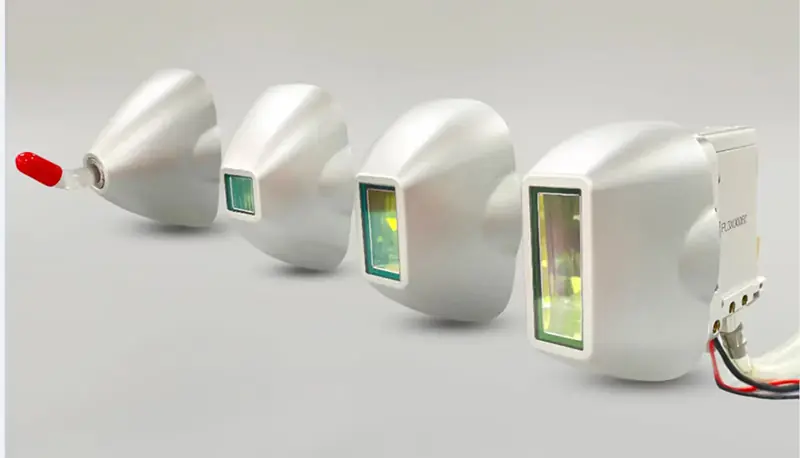
The Big 5 Technologies: A Deep Dive
1. Pico Laser: The Pigment & Tattoo Specialist
Because of its unique photoacoustic effect, Pico laser has become a game changer for pigmentation and tattoo removal. Unlike traditional Q-Switched Nd:Yag Laser which decompose melanin by thermal energy, Pico Laser uses ultrashort trillionths of a second to generate powerful shock waves. These shock waves crush melanin particles into tiny fragments that can be easily eliminated by the body’s immune system without causing obvious thermal damage to the surrounding skin tissue.
The clinical advantages of Pico Laser are clear: it delivers exceptional results for stubborn pigmentation issues such as sun spots, age spots, melasma, and even multi-color tattoos—concerns that often prove resistant to other treatments. Its low heat damage also means which reduces the risk of post-inflammatory pigmentation (PIH), making it safer for a wider range of skin types. For clinics seeking to provide high-quality pigmentation treatments, it is a wise choice to invest in high-performance equipment. This system features pulse widths shortened to the picosecond level, allowing for safer and more effective treatment of deep skin tones, which are traditionally more prone to PIH.
2. HIFU (High Intensity Focused Ultrasound): The Non-Invasive Lift
For patients seeking a non-surgical alternative to facelifts, HIFU—powered by Ultrasound HIFU Beauty Machine—is the gold standard. The working principle of this technology is to focus high-intensity ultrasonic energy directly on the fascia layer of SMAS (superficial muscle aponeurosis system), that is, the deep connective tissue supporting the facial structure. The energy produces tiny thermal condensation points in the SMAS layer, which triggers the natural healing reaction of the body and stimulating the production of new collagen over 2 to 6 months.
Because of the minimal downtime, HIFU is called “lunchtime treatment”, which is an ideal choice for patients with mild to moderate skin drooping, loss of jawline definition and mild to moderate wrinkles. It does not require incisions and anesthesia, and patients can resume their daily activities immediately after treatment. Modern clinics are increasingly fond of systems with multi-dimensional scanning function. These devices have probes with depths ranging from 1.5 mm to 13.0 mm, allowing practitioners to aim at multiple layers of the skin and solve the needs of face lifting and body shaping in one treatment.
3. CO2 Fraction Laser: Reproducing the Gold Standard
When it comes to addressing deep skin concerns like acne scars, deep wrinkles, and stretch marks, CO2 laser skin rejuvenation—specifically fractional CO2 laser technology—stands out as the “ultimate solution.” The working principle of this technology is to create tiny controlled micro-thermal zones (MTZs) in the skin. These MTZs trigger a robust collagen remodeling process, as the body works to repair the small areas of damage, resulting in smoother, firmer, and more youthful-looking skin.
Fractional CO2 Laser machine Manufacturers like Homi Laser know the importance of accuracy in these treatments. Homi Laser Fractional CO2 Laser devices and other devices have a variety of scanning modes (including circular, square and linear), allowing doctors to tailor the treatment according to the shape and size of scars or wrinkles of patients. Clinical studies, including the randomized controlled trial (RCT) published in Dermatologic Therapy in 2025, show that fractional CO2 laser can effectively reduces static periorbital wrinkles, and low energy combined with high density coverage provides the best results, while minimizing the risk of PIH. While it does require a longer recovery period (5-10 days of scabbing), the dramatic, long-lasting results make it a highly sought-after treatment for patients with more severe skin concerns.
4. IPL/DPL: The Versatile All-Rounder
IPL (Intense Pulsed Light) and DPL (Delicate Pulse Light) are part of the same family of technologies, offering versatile, non-invasive solutions for a range of common skin concerns. IPL uses a broad spectrum of light (400-1200nm) that targets multiple chromophores (melanin, hemoglobin, and collagen) in the skin, making it effective for reducing redness, pigmentation, and enlarged pores, as well as improving overall skin tone and texture. DPL is a more advanced form of IPL, which uses a narrow spectrum (500-600nm or 550-650nm) to aim at hemoglobin and melanin more accurately, reducing discomfort and the risk of side effects.
The clinical advantage of IPL/DPL lies in its versatility-it is an excellent “entry-level” treatment for clinics wishing to attract new patients, because it solves many problems in a single treatment with almost no downtime. Equipment equipped with cooling technology, improves the comfort of patients by minimizing heat-related stimuli, even when providing high energy output. This makes IPL/DPL the main product of clinics that pay attention to accessibility and patient satisfaction.
5. Hydro Facial / Oxygen Therapy: The Foundation of Care
Although the previous four technologies focus on targeted therapy, hydrotherapy and oxygen therapy are the basis of any comprehensive skin care program. This technique combines mild vacuum suction with injecting nutritional serums (such as hyaluronic acid, vitamins and antioxidants) into the skin to remove dirt, grease and dead skin cells. The result is deep cleansing, hydration, and improved skin texture-all of which are not irritating.
As a supplementary therapy of laser and HIFU surgery, hydrotherapy facial care is particularly important. A white paper from Dropofparadise highlights that Hydro Facial treatments before laser procedures improve hydration and skin tone, while post-laser Hydro Facial (performed at least 14 days after treatment) supports healing and enhances overall results. For clinics seeking to increase the average transaction value, a multifunctional platforms such as Homi Laser Hydra facial system is an ideal choice. These systems integrate Hydro Facial machine with ultrasound, cold spray, and vacuum adsorption, allowing practitioners to offer a range of complementary treatments in one device.
Technology Comparison Table: Quick Decision Guide
| Technology Type | Core Concerns | Suitable Skin Types (Fitzpatrick) | Recovery Time |
| Pico Laser | Pigmentation, tattoo removal, brightening | I – VI (All skin types) | 1-2 days (mild redness) |
| HIFU | Sagging skin, wrinkles, body contouring | I – VI | None (immediate return to daily activities) |
| CO2 Fractional Laser | Acne scars, deep wrinkles, stretch marks | I – III (Best for light skin tones) | 5-10 days (scabbing) |
| IPL / DPL | Redness, dullness, enlarged pores | I – III | None / very short |
| Hydro Facial | Blackheads, dryness, daily cleansing | All skin types | None |
Clinical Adaptation: Recommendations Based on Fitzpatrick Skin Typing
The Fitzpatrick Skin Scale, developed by dermatologist Thomas B. Fitzpatrick in 1975, is a key tool to determine the safety and effectiveness of skin regeneration therapy, because it classifies skin types according to its response to ultraviolet rays. Understanding this scale helps practitioners to avoid complications like PIH and ensure the best outcome for each patient.
- For light skin color (Fitzpatrick I-III): These skin types have a higher tolerance to thermal energy, making CO2 laser skin rejuvenation and IPL/DPL ideal choices. The thermal effects of these technologies can be fully utilized to stimulate the production of collagen and solve the problems of deep wrinkles and pigmentation, without obvious side effects. Patients with these skin types usually see the most significant effect of carbon dioxide fractionated laser treatments because their skin heals quickly and PIH is not easy to occur.
- For dark complexion (Fitzpatrick IV-VI): These skin types have high melanin content, which will increase the risk of PIH when exposed to too much heat energy. Therefore, practitioners should give priority to the technologies with minimal epidermal damage, such as micro-laser and HIFU (provided by ultrasonic HIFU beauty machine). Both of these techniques bypass the epidermis and focus on the deep layers of the skin, reducing the risk of pigmentation problems while still providing effective results.
Why Distributors Worldwide Choose Homi Laser? The Manufacturer Advantage
As a leading manufacturer of fractional CO2 laser and a comprehensive beauty equipment provider, Homi Laser stands out in the global market for its commitment to quality, precision and flexibility. This is why dealers and clinics around the world trust Homi Laser to meet their skin regeneration needs.
- Parameter accuracy: Every Homi Laser device has undergone strict energy meter test before leaving the factory. This ensures that the delivered clinical energy is 100% matched with the set parameters, ensures that patients get consistent and reliable results, and reducing the risk of complications. This level of accuracy is very important in cosmetic medicine, and even small change in energy output can affect the treatment effect.
- Flexible customization of OEM/ODM: Homi Laser understands that brand identity is very important for dealers and clinics. This is why we provide comprehensive OEM/ODM customization services, from customizing the boot screen logo of the system to matching the shell color of the equipment with your brand. This flexibility enables distributors to establish their own brand in the market, while taking advantage of Homi Laser’s advanced technology and manufacturing expertise.
Frequently Asked Questions (FAQs)
Q1: What technology can provide the highest return on investment?
A: The ROI of each technology depends on your clinic’s target clientele and pricing strategy. Ill/DPL and Hydro Facial are ideal choices for quickly acquiring patient, because they are affordable, versatile and have the minimal downtime, and are ideal choices to attract new patients. On the other hand, Pico laser and HIFU (using ultrasonic HIFU beauty machine) are high-ticket projects with high profit margins. These treatments usually pay back their investment within 3-6 months, because they cater to patients who are willing to pay more for non-invasive and efficient results. According to industry report, the average return on investment of non-invasive beauty equipment like this is 25% or higher, which makes them a valuable investment for clinics.
Q2: How can we ensure that our aestheticians can operate these devices safely?
A: At Homi Laser, safety is the most important thing. All our equipment is equipped with detailed operation manuals and free online video training, aiming to help all experienced beauty artists master the equipment. Additionally, our devices feature pre-set clinical parameters for different skin types and concerns, allowing even novice users to deliver safe, effective treatments. We also provide continuous technical support to ensure that clinics can get guidance whenever it is needed.
Q3: What is the service life of the laser handle of your equipment?
A: Homi Laser uses high-quality imported laser bars in our equipment to ensure long-term durability. For example, the laser handle of Picosecond Laser machine has millions of emission counts, which greatly reduces the long-term consumable costs of the clinics. We also offer replacement parts and maintenance services to extend the lifespan of your equipment, ensuring that your investment continues to deliver value for years to come.
Conclusion
Choosing the right skin regeneration technologies is a key decision for clinic owners and distributors, because it directly affects the satisfaction of patients, the reputation of the clinic and the return on investment. The five core technologies discussed-dermatology laser, HIFU (powered by Ultrasound Hifu Beauty Machine), carbon dioxide laser skin rejuvenation, IPL/DPL and hydro facial treatment-each have unique advantages, which can meet the needs and clinical goals of different patients. By understanding the technical mechanisms, clinical applications and ideal patient file, you can choose the right equipment combination to meet the needs of the target market.
As a reliable manufacturer of fractional CO2 laser, Homi Laser is committed to providing high-quality and customizable equipment to help clinics flourish in the highly competitive beauty industry. Whether you want to provide entry-level treatments, high-priced anti-aging solutions or comprehensive skin care services, Homi Laser’s series of equipment can satisfy you.