Key Takeaways
- A 980nm diode laser targets hemoglobin inside small blood vessels, making it a reliable, non-invasive way to clear spider veins and facial redness.
- Compare five details before you buy: power, spot size and fiber delivery, pulse settings, cooling, and safety features.
- One vascular laser can also treat nail fungus, support skin rejuvenation, and assist physiotherapy, which spreads the cost across more services.
- Machines with no consumables keep monthly costs predictable and suit clinics that treat patients every day.
What Is a 980nm Diode Laser Spider Vein Removal Machine?
A Non-Invasive Laser That Targets Blood Vessels
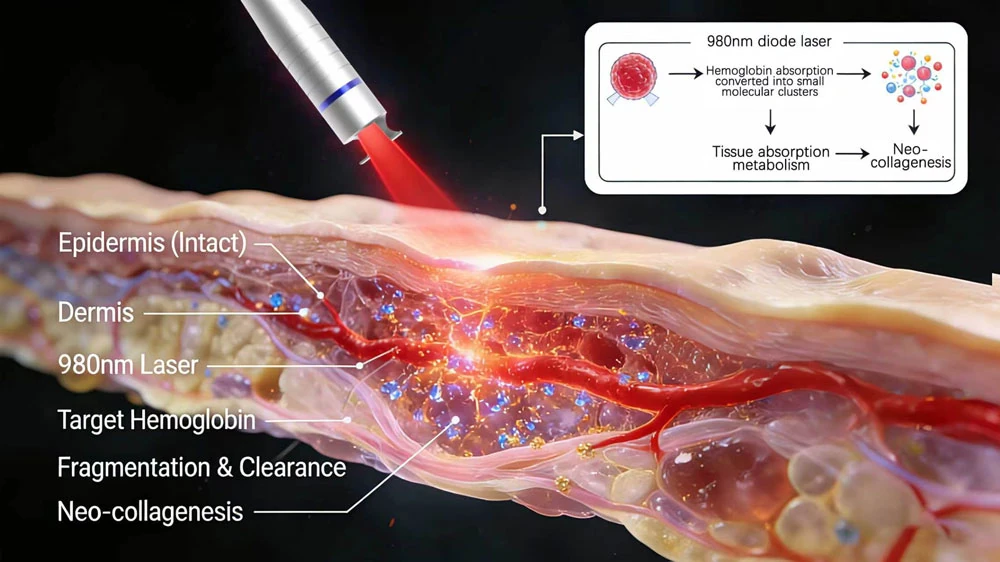
A 980nm Diode Laser Spider Vein Removal Machine is a medical-grade laser device that emits near-infrared light and delivers it to the skin through a thin optical fiber. Hemoglobin, the oxygen-carrying protein inside red blood cells, absorbs the 980nm wavelength very well. When the beam reaches a small vessel, the blood heats quickly, the vessel wall seals, and the body clears the treated tissue over the following weeks.
Treatment feels simple for everyone involved. The practitioner moves a handpiece across the area, the laser releases short pulses, and a session often lasts minutes rather than hours. There is no surgery, no anesthesia, and no stitches. Most patients leave and return to their daily routine right away. For a clinic, that speed and comfort make vascular work an easy service to add.
What Does a 980nm Vascular Laser Treat?
Spider Veins and Vascular Lesions at a Glance
Spider veins, also called telangiectasia, are tiny blood vessels that sit close to the surface of the skin and show up as red, blue, or purple lines in a web-like pattern. They usually appear on the cheeks, around the nose, and on the legs. Genetics, hormonal changes, long hours of standing, sun damage, and aging all play a part in forming them. They rarely cause medical problems, yet they bother a large share of adults, because they are so visible.
Because spider veins are common and noticeable, demand for a fast, non-invasive fix stays steady all year. That is why laser treatment has become a standard option in aesthetic medicine.
Facial Redness and Leg Spider Veins
Vascular lasers handle two main jobs: facial redness and leg spider veins. On the face, fine vessels around the nose and cheeks respond quickly, often within one or two sessions. On the legs, vessels sit deeper, so treatment usually takes more sessions spaced a few weeks apart. Either way, results appear gradually as the treated lines fade over two to six weeks.
Beyond Veins
A 980nm Diode Laser is not limited to vessels. The same energy can heat fungal tissue in nail infections, stimulate repair in the skin, and ease local inflammation. Many clinics put one device to several uses:
- Spider vein and telangiectasia removal
- Nail fungus treatment
- Skin rejuvenation and redness relief
- Physiotherapy for pain and tissue recovery
Why 980nm for Vascular Treatment?
How the 980nm Wavelength Matches Blood
Wavelength choice sits at the heart of vascular laser work. Visible light is absorbed by melanin in the skin, which limits how deep it travels and raises the risk of pigmentation changes. A 980 nm diode laser for vascular removal operates in the near-infrared range, where hemoglobin absorbs energy well and the light still reaches vessels below the surface. That creates a useful balance: strong enough to close a vessel, gentle enough to spare surrounding skin.
Water also absorbs 980nm light to a helpful degree, which supports work on the vessel wall itself. For fine facial vessels and shallow leg veins, this wavelength offers a practical middle ground between shorter, pigment-sensitive wavelengths and deeper lasers that demand more energy.
Why Clinics Add a Vascular Laser
From a business point of view, vascular treatment appeals for three reasons. Demand is broad, because spider veins affect people of all ages and skin tones. The service is non-invasive, so patients accept it easily and often come back for other treatments. And the cost per session stays low, especially when the device needs no consumables. For a medspa or dermatology clinic, adding vascular work extends services patients already trust.
How Does It Remove a Vein?
Selective Photothermolysis, Explained Simply
Laser vein removal rests on a principle called selective photothermolysis. Picture heating a thin straw until it seals shut. The laser picks a wavelength that blood absorbs far better than the tissue around it, a short pulse heats the blood inside the vessel, the heat damages the vessel wall, and the vessel collapses.
Pulse duration controls where the heat lands. A very short pulse keeps the energy inside the small vessel, so the skin on top stays cool. That precision separates modern diode lasers from older, harsher approaches.
What Happens After Treatment
Right after a session, treated vessels may look darker for a day or two as blood coagulates inside. Over the next two to six weeks, the body reabsorbs that tissue and the lines fade. Mild redness or swelling can appear but usually settles within a couple of days. Patients can return to work the same day, which helps explain why the treatment is so popular.
How to Choose a 980nm Diode Laser Vein Removal Machine
A Spider Veins Machine can look similar at a glance, yet the differences show up during treatment. Before comparing prices, compare the details below, because each one affects results, comfort, and running costs.
Five Points to Compare
These five points cover the decisions that matter most in a clinic.
| Detail | Why It Matters | What to Look For |
| Power output | Higher power closes vessels faster and shortens sessions | Around 20–30W for professional use |
| Wavelength | Determines what the energy targets | 980nm for hemoglobin and vascular work |
| Spot size and fiber delivery | Controls precision and protects surrounding skin | A fine spot of 0.2–0.5mm with a detachable fiber |
| Pulse mode and frequency | Shapes how energy is deposited | Adjustable pulse width and frequency range |
| Cooling and safety | Keeps patients comfortable and prevents burns | Temperature control, automatic shutoff, emergency stop |
Safety and Cooling
Safety deserves attention before price. Check the practical safeguards: temperature control that stops output when the tip gets hot, a clear aiming beam, and an emergency stop. Cooling changes patient comfort more than many buyers expect.
Consumables and Long-Term Running Costs
The purchase price is only part of the story. Some devices depend on replaceable tips, fibers, or cartridges that add up over hundreds of treatments. Others run with no consumables, which keeps the cost per session predictable. Ask how long the machine can run continuously, how easy it is to clean, and whether spare parts will stay available for years. These answers shape monthly profit more than the initial quote does.
After-Sales, Training, and OEM/ODM
A laser is a long-term partner, so support matters as much as the hardware. Look for clear manuals, video guides, and online training so your team can treat patients with confidence from the start. Check the warranty, the response time for technical issues, and the availability of spare parts. Distributors should also ask about OEM and ODM services — custom logos, casing, software language, and interface settings — because those options help you build a brand around the device.
A 980nm Vascular Laser Built for Clinic Work
The 980nm Diode Laser Vein Removal & Vascular Treatment System from Homi Beauty was built around the priorities above. It pairs a 980nm wavelength with a 30W output so sessions stay quick, and it keeps the workflow simple enough for a small medspa and a busy dermatology clinic alike.
One Machine, Multiple Treatment Modes
The device delivers energy through a fiber-optic coupler and a detachable fiber, and the handpiece focuses the beam into a fine spot of 0.2–0.5mm. Pulse width stays at 60ms, and frequency adjusts from 1 to 9Hz, so the practitioner can match settings to the vessel size and the patient’s skin. A 650nm aiming beam shows exactly where each pulse lands, which makes the operator’s work more precise.
Features That Cut Clinic Costs
- No consumable components — the device runs continuously without replacement parts, so the cost per treatment stays low.
- Ultra-fine treatment tip — the fine tip keeps the epidermis intact and reduces downtime and complaints.
- Ice-compress handpiece — the built-in ice hammer cools the treated area right after the session and shortens recovery.
- Automatic temperature control — output stops when the tip reaches a preset threshold, adding a layer of burn protection.
Support for Clinics and Distributors
Every unit ships with user manuals and instructional videos, and online training is included so operators can work confidently from day one. After-sales support runs around the clock, and the main unit carries a one-year warranty with free repairs during that period. Distributors can also take advantage of OEM and ODM services — logo placement, custom casing, and interface software — to present the device under their own brand.
Frequently Asked Questions
How many sessions does spider vein removal usually take?
Fine facial vessels often respond within one or two sessions. Leg spider veins sit deeper and usually need two to four sessions spaced about four to six weeks apart. Lines fade gradually over the following weeks, so patience is part of the plan.
Is 980nm or 1064nm better for treating spider veins?
Both wavelengths are used for vascular work, and each has a role. 980nm is absorbed well by hemoglobin and offers a comfortable balance of depth and precision, which suits fine facial vessels. 1064nm penetrates deeper, so some practitioners prefer it for deeper leg veins. Many clinics choose the wavelength depending on the vessels they treat most often.
Can one 980nm laser also treat nail fungus and skin issues?
Yes. The same machine can heat fungal tissue in nail infections, support skin rejuvenation, and assist physiotherapy. Before buying, confirm which applications the device supports, because that flexibility decides how quickly it pays for itself.
How long do laser vein removal results last?
A treated vessel closes for good, so the lines that disappear do not come back. New vessels can still appear over time because of genetics, hormones, or lifestyle. Some patients book a maintenance session now and then to keep the area clear.
What should I check before buying a vascular laser for my clinic?
Start with the five points in this guide: power, wavelength, spot size and fiber delivery, pulse settings, and cooling. Then weigh running costs and consumables, training and warranty, and OEM options if you distribute equipment. A clear checklist prevents an expensive mistake.
Conclusion
Spider vein treatment combines steady demand, a non-invasive patient experience, and a low cost per session — exactly the mix that makes a service profitable. A 980nm vascular laser brings that service within reach for a small medspa and a large clinic alike, and the same device can stretch into nail, skin, and physiotherapy work. If you are planning to add vascular treatments to your clinic, contact Homi Beauty for technical details, pricing, and OEM options.